Places
Residences & Developments

The familiar feeling of coming home.
There is a difference between entering a building for the first time and returning to it every evening.
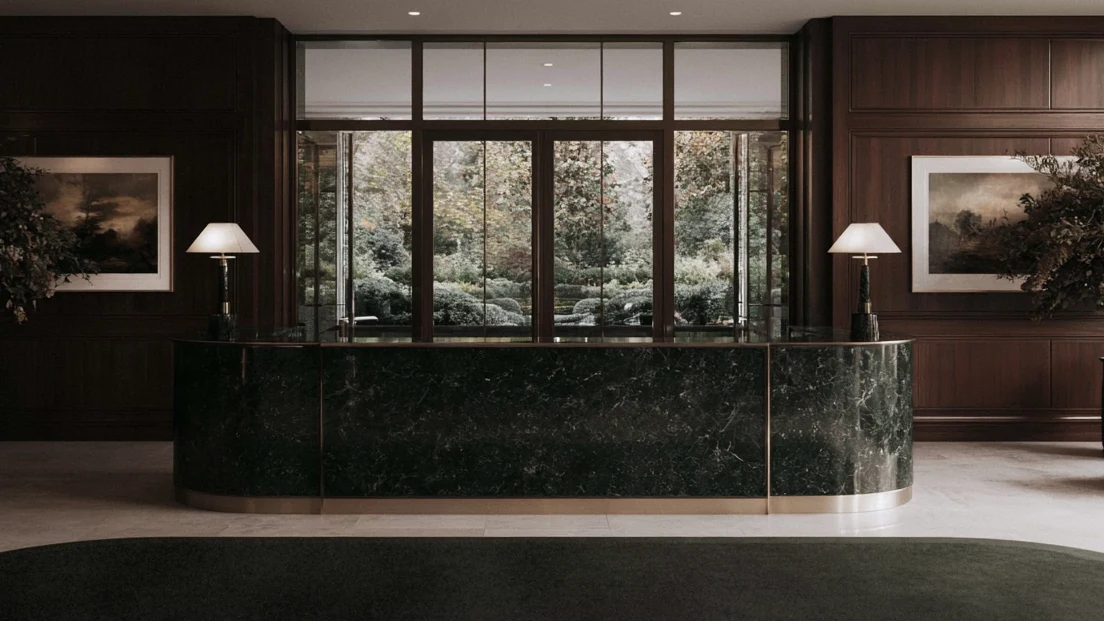
The familiar weight of the entrance door, the sound of footsteps on stone, a glimpse of the garden through the lobby window. These details become part of daily life, often passing unnoticed until something changes.
A residential building is experienced through repetition. Its shared spaces belong to the routines of the people who live there, and any fragrance used there has to respect that familiarity.
The Character of an Address
A converted townhouse may retain its original staircase and timber panelling. A contemporary development might be defined by pale stone, generous windows and planting that softens the transition from street to interior.
These materials, together with the building’s setting and history, provide useful references for fragrance.
OLFO studies the architecture of the property and the thinking behind its design. A composition may take its direction from the surrounding landscape, a particular material or the quieter associations of domestic life.
The fragrance should suit the building itself and avoid the conventions of hotel lobbies or commercial interiors.
Shared Spaces, Private Lives
The entrance hall is a place of brief encounters. Residents pass through on their way to work, collect deliveries or stop to speak with a neighbour. A shared lounge or library may be used for much longer periods.
That difference shapes where fragrance goes.
Some communal areas may accommodate a discreet scent, while others are better left unscented. In residential buildings, particular care is needed around the movement of air towards private apartments, the duration of exposure and the differing preferences of residents.
A fragrance that one person enjoys should not become an unavoidable part of another person’s home.
Within the Life of the Building
For a new development, fragrance can be discussed while the architecture, interiors and building services are being planned.
In an occupied property, the starting point is the building as it is lived in. The management team understands its daily routines, the use of communal rooms and the practical requirements of maintaining them.
This knowledge helps decide whether an olfactory identity suits the building at all, and how to introduce it without disturbing everyday life there.
Related